Forbidden Domain
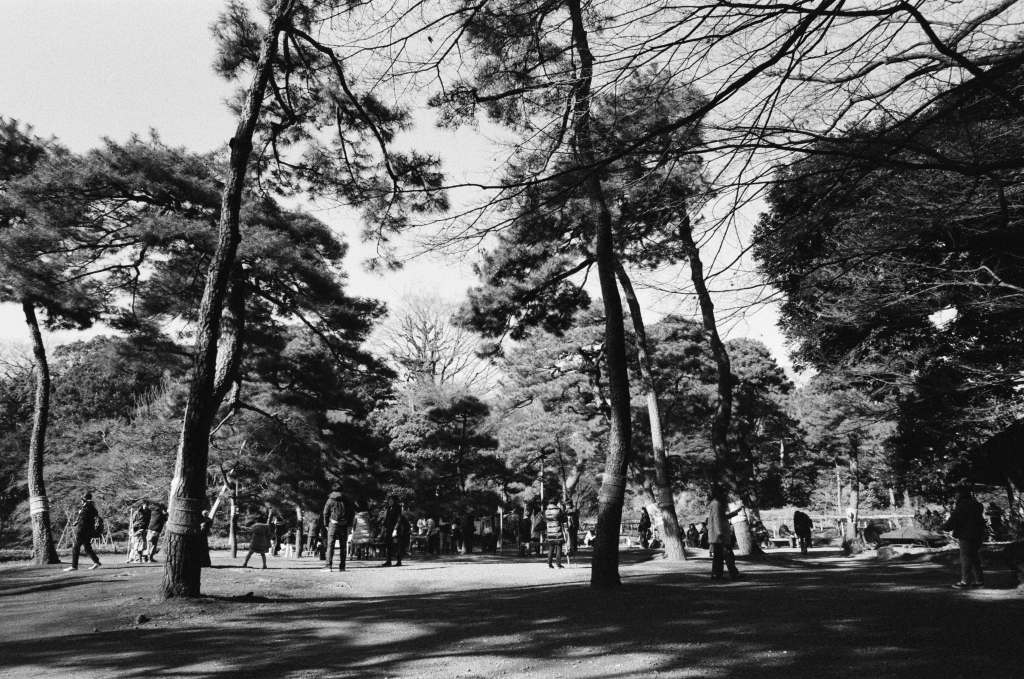
This image is a photograph of an area in Koishikawa Korakuen, a public garden in Japan, which I happened to walk upon during my trip to Tokyo last month. While enjoying the scenery, I walked past an open area beside a pond where children and parents were playing together, surrounded by tall trees (notice the group of people in the center of the image). Through using soft material for the ground, dirt, the space creates an environment that promotes playing: children will perceive the space as having low risk of getting hurt. While there were no physical boundaries, I felt as if the area was a space I should not intrude. Japan is a very contextual society, where there are implicit cultural norms that people adhere. Despite the park being a public area, the trees surrounding this open space made it feel sacred, in that it is a space for children to play and bond with their parents. As a tourist, I thought I shouldn’t intrude in the locals’ domain. I believe this fits in with the definition of domain – “a stable pattern of social and physical organization” – since it is a place regularly utilized by locals for a specific activity (Lavine). Moreover, just as how the Dogon’s domain came to symbolize their inherent beliefs and social values, I believe this domain demonstrates Japanese social values. This domain – an open area surrounded by trees – shows Japanese people’s emphasis on bonding activities between young children and their parents. This fits in with my prior knowledge of Japan being a family- focused society. As seen from this example, societal domains can foster culture and be a powerful conveyer of beliefs.
 Ife's 212 Understanding Architecture Section