
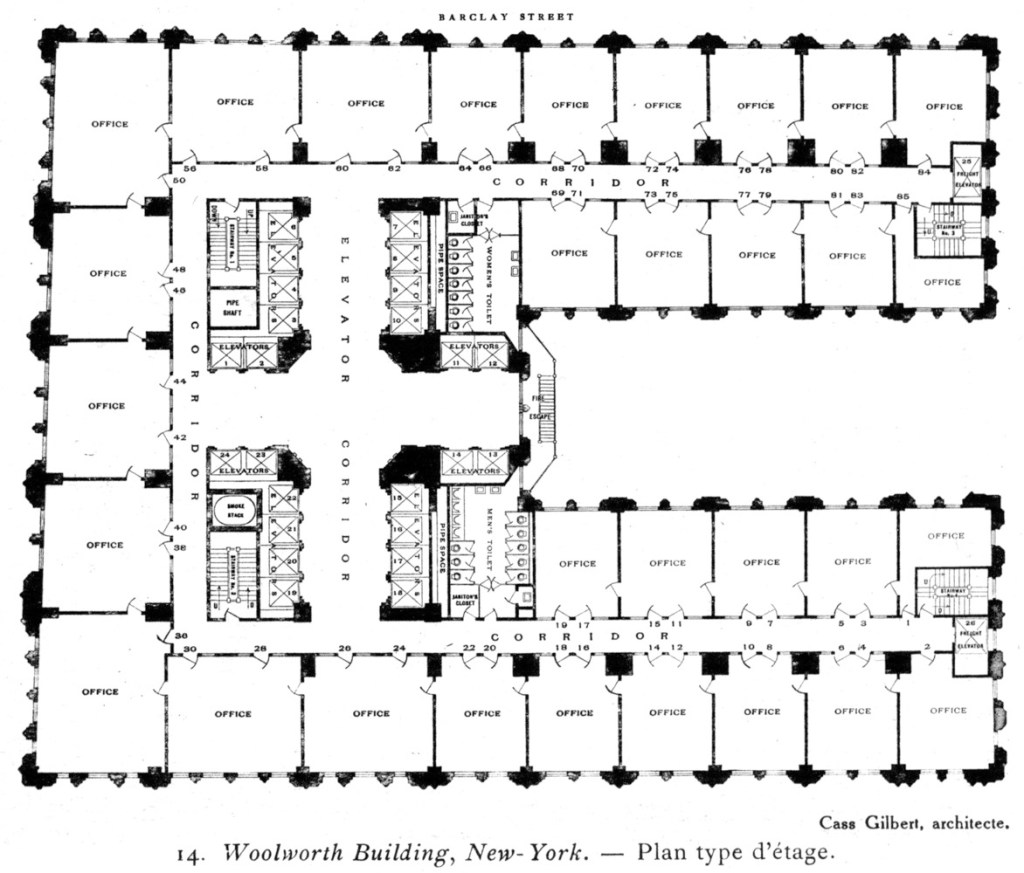
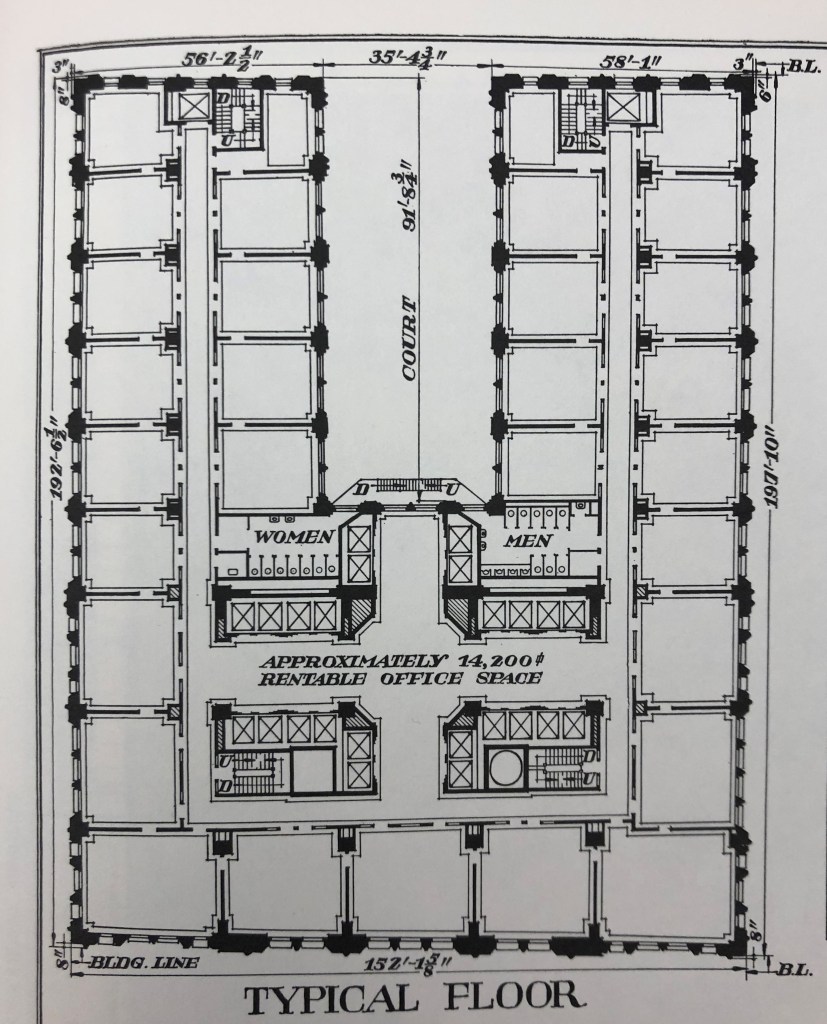
All indoor spaces in Plan A are annotated, defining how each space is being/imagined to be used, while Plan B includes few annotations for indoor space use, including instead a written message indicating the financial and utility value of the depicted space. The annotation for the location of Barclay street in Plan A is informative on the relative positioning of the building to its outside context. Exterior building dimensions and building lines are written in Plan B, giving the viewer a sense of the size of the building. The walls between each room in Plan B are drawn with multiple lines, yielding the impression of thick walls and potentially greater room privacy compared to that in Plan A, where walls are drawn with single, lightly bolded lines. In Plan A, all doors are numbered and the direction and size of the doors are clearly marked through the angled lines and curves. The absence of doors and minimal wall gaps in Plan B make entryways a bit more conspicuous.
 Ife's 212 Understanding Architecture Section